There’s a lot going on behind a pint of cask.
By the time you see it, the hard work is mostly done. The pump clip is on, the beer is ready and someone behind the bar is pulling it into your glass. But before it gets there, that pint has been through our brewhouse in Market Drayton, spent time fermenting, been filled into cask while it is still very much alive, travelled out on our dray and been given a final bit of care in the pub cellar.
Cask has been served in British pubs for centuries and, although the equipment has moved on considerably, the basic idea behind it is still rather simple. You brew the beer, put it into a cask with some life still left in it, let it condition and serve it from that same cask.
So, for Cask Matters, we thought we’d follow a Joule’s pint properly, right from the ingredients we start with to the pint you finish with.
Four ingredients. That’s where it starts.
Beer really doesn’t need very much: water, malt, hops and yeast.
Four ingredients, but what you choose and what you do with them can give you completely different beers.
At Joule’s, the first of those ingredients is particularly important. Beer is roughly 95% water, so what’s in that water has a big influence on what eventually ends up in your glass.
Our brewing water comes from a borehole here at the brewery. The borehole itself reaches around 60 metres underground, drawing from the aquifer beneath Market Drayton. Importantly for us, it’s the same aquifer that runs through Stone, home of the old Joule’s brewery.
That gives us a rather nice connection between the beer we brew today and the Joule’s beers that came before it, and there’s plenty more history wrapped up in our cask.
A bit of history before the grain
Cask ale has a particularly British story. Long before modern keg fonts, cooling systems and stainless steel vessels, beer was being stored and served from wooden casks. The beer engine arrived towards the end of the 18th century, allowing beer to be drawn by hand from the cooler cellar below the pub, and the handpull gradually became part of the furniture of the British bar.
Our own brewing story reaches back into that world too.
Joule’s has its roots in Stone, where brewing stretches back to the monks of Stone Priory. The story goes that the monks blessed barrels with a red cross, a symbol later adopted by Joule’s and registered as our trademark. Today, the Joule’s Red Cross is the sixth oldest registered beer trademark in the world.
So when we talk about cask as part of our brewing heritage, there is a genuine connection there.
But enough history. We’ve got beer to make!
First, the malt
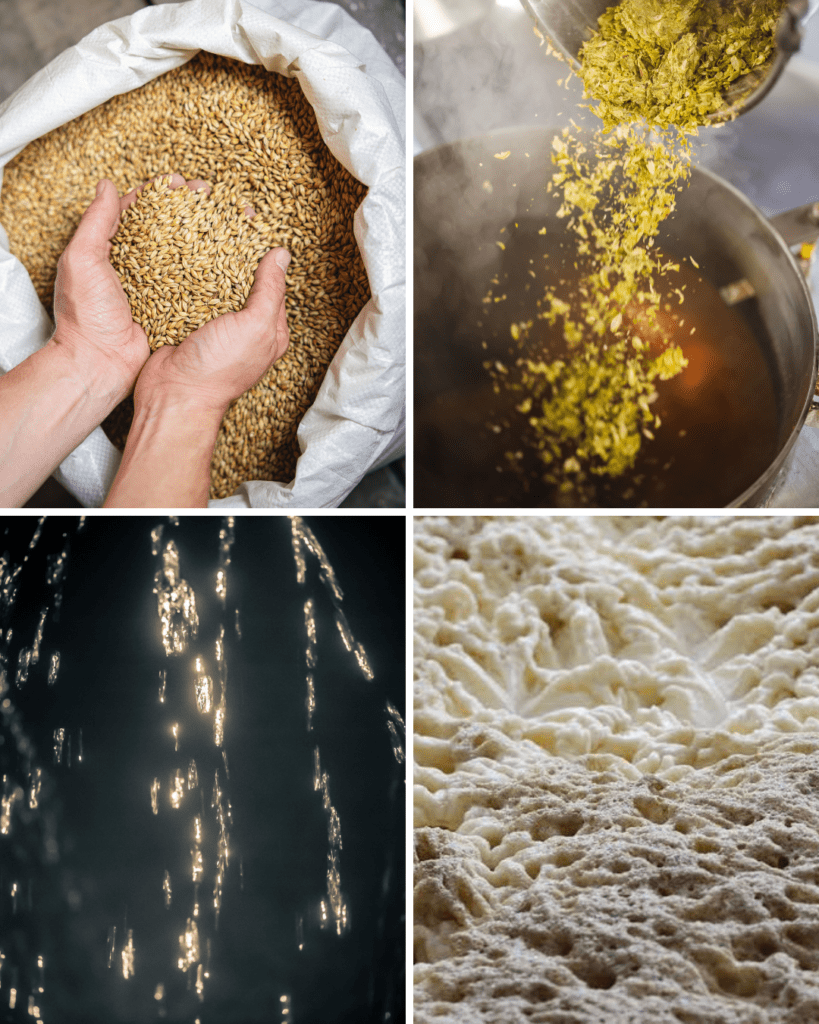
Most Joule’s beers are made with 100% British barley, with the odd exception for particular styles where we might use another grain, for example at Oktoberfest we enjoy making a special German brew on our Batch line. Wherever we can, our malted barley comes from family-run British farms.
Before barley reaches us, the maltster has already done something rather clever with it. They encourage the grain to start germinating, activating the natural enzymes inside it, and then stop that process with heat before the grain uses up the sugars we want for brewing.
How it is heated also helps determine the colour and flavour of the finished malt. That’s why malt can bring much more to a beer than simply alcohol.
- Pale Malt forms the base of many of our beers and gives us a clean, balanced starting point.
- Crystal Malt brings richer caramel and toffee flavours. It’s part of what gives our Pale Ale its colour, flavour and fuller feel.
- And Chocolate Malt, used much more sparingly in beers such as Slumbering Monk, brings darker colour and hints of chocolate, coffee and toasted flavours.
Once the malt reaches Market Drayton, it heads up our malt tower.
It’s 71 steps up (Yes we counted!), and gravity to get back down.
Our malt tower is one of the more traditional parts of the brewery, and there are 71 steps to the top. Our brewers know that number rather well…
The malt is hoisted up and then gravity helps move it down through the brewing process, much as it would have done in older breweries. Before brewing begins, the malt is milled, cracking open the grain while importantly keeping plenty of the husk intact. It then drops down towards the first major stop of the brew day.
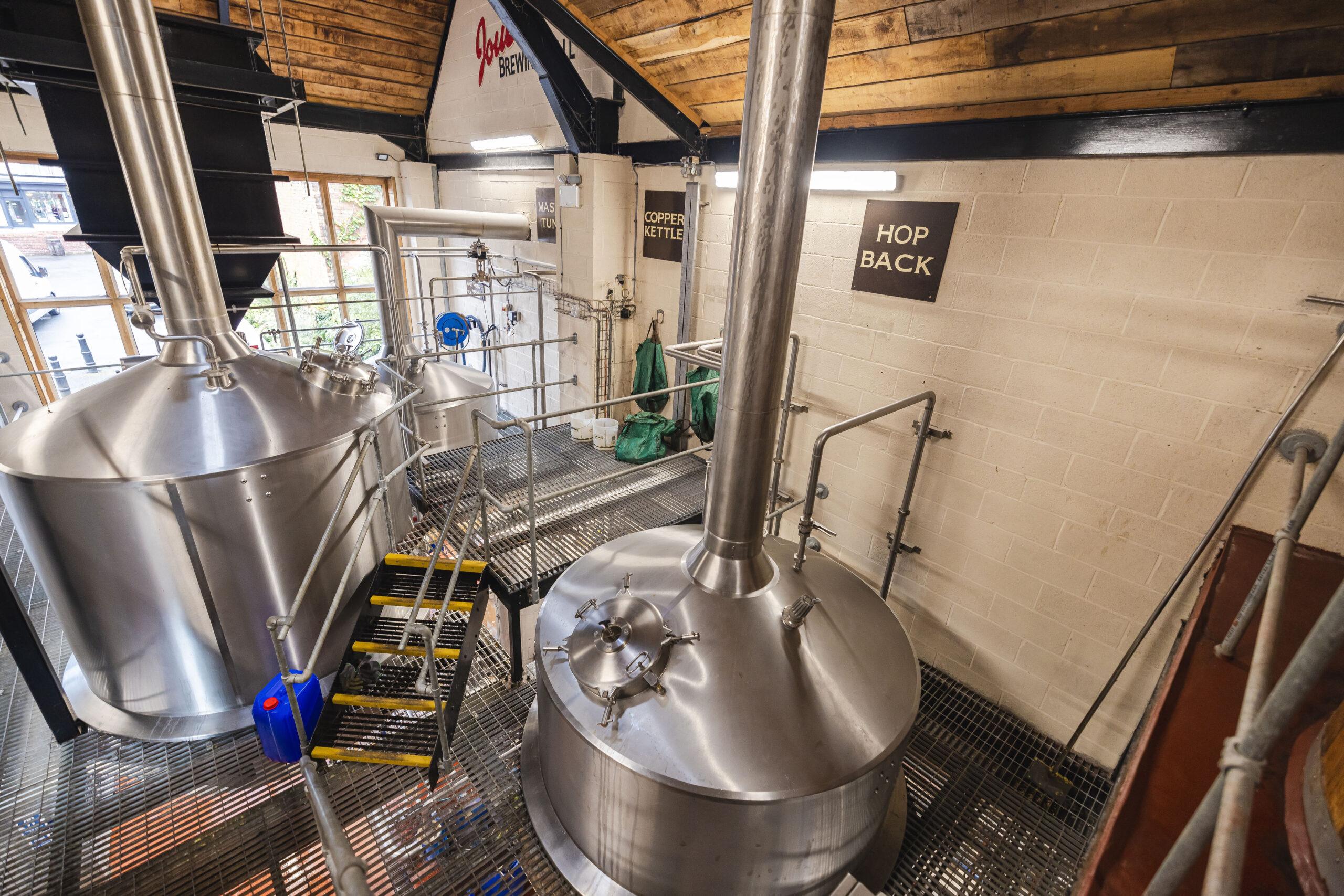
The mash tun.
Turning grain into something yeast can eat
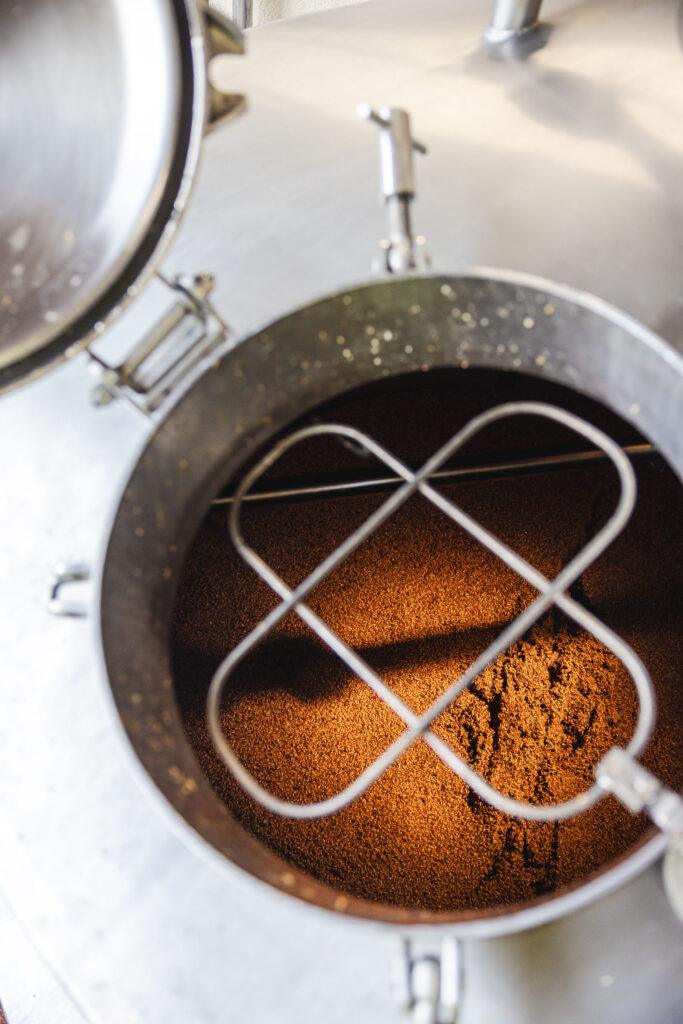
The mash tun is where our milled malt meets hot brewing water, or ‘brewing liquor’, as it is known once we’re using it to make beer.
The mixture looks a little bit like porridge and sits in the mash tun for around 45 minutes. During that time we carefully control things such as temperature, pH and consistency so the natural enzymes in the malt can get to work, converting and releasing the sugars we need. We then draw the sweet liquid away from the grain.
Remember those barley husks we were careful not to destroy? They now form a natural filter bed on the false floor of the mash tun, helping us separate the liquid from the spent grain.
The liquid we’ve collected is called ‘wort’.
The grain has done its job, but it doesn’t go to waste. Our spent grain goes to local farmers for animal feed. Many of which find it’s ways back to your locals for your Friday Sausage rolls free on the bar at 5pm.
The wort, meanwhile, is off to meet the hops…
Into the copper
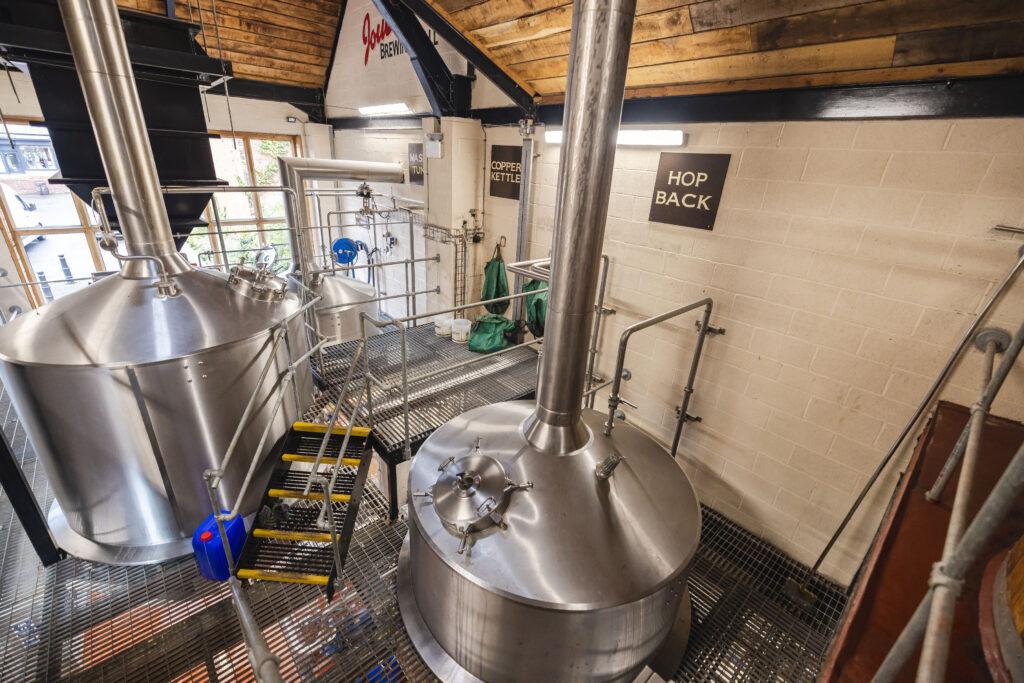
The next stop is our copper, where we bring the wort to a rolling boil for roughly an hour.
The boil does several jobs. It gives us a clean, sterile wort for our yeast to work with, helps us with clarity and, importantly, allows us to draw bitterness from the hops. Hops are where things get particularly interesting.
We use varieties from Britain and around the world. Traditional British hops can bring earthy, herbal and floral character, while varieties from places such as America and New Zealand can bring much bigger citrus, grapefruit and tropical aromas.
It’s not simply which hop we use that matters, when we use it matters too.
Boil hops for long enough and the resins within them give us bitterness. Add hops later and we can hold onto more of their aromatic oils, giving us more of those fruity, floral and citrus notes. Some beers are dry hopped after fermentation to push that character further still.
Our Citra Blonde is a good example of how far cask can move from the old idea that every cask beer must be dark and bitter. We use Citra and Idaho 7, bringing plenty of citrus, grapefruit and tropical character into a light cask beer.
Once the boil is finished, the wort moves through our hop back. Whole leaf hops form another natural filter here, catching material we don’t want while adding their own flavour and aroma.
Then we cool the wort down, because it’s time for the smallest ingredient to do the biggest job.
Our Joule’s yeast
We have our own Joule’s yeast strain, kept safely at the National Collection of Yeast Cultures.
It might not look particularly exciting. As our brewery tour rather accurately describes it, it’s essentially a brown sludge. But without it, we’ve made some very elaborate hop-flavoured sugar water.
Yeast consumes the sugars we’ve taken from the malt and turns them into alcohol and carbon dioxide. At the same time, all sorts of other biological and chemical processes are happening that help create, develop and refine the flavours in the beer.
And it’s around here that our cask and keg beers begin to go their separate ways.
This is where cask becomes cask
Up to this point, cask and keg have followed broadly the same journey.
Our cask beers now head into one of our six traditional open-top fermentation vessels, each holding a single 5,000-litre brew.
Because those vessels don’t hold pressure, the carbon dioxide produced during fermentation is allowed to escape. Fermentation takes around three days to reach the point we want, after which we skim yeast from the top and begin cooling the beer.
After around five to six days, enough yeast has dropped out for us to be ready to package the beer.
Or, in brewery language, we ‘rack it’.
And here’s the important bit.
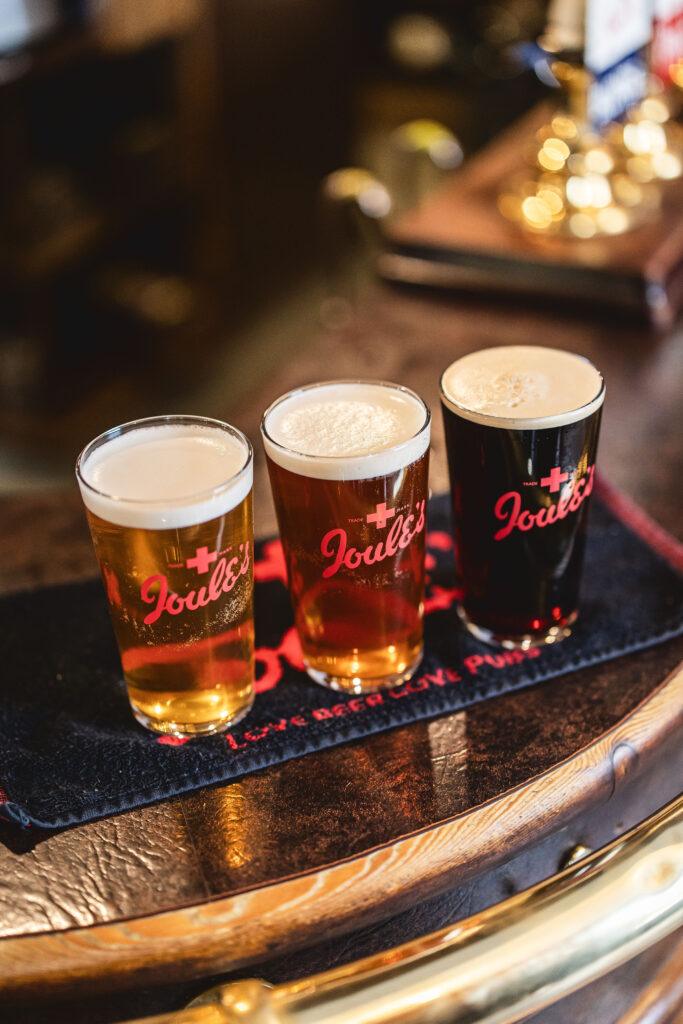
When we put cask ale into a cask, it isn’t completely finished.
We deliberately leave a small amount of yeast behind because it still has another job to do.
A living pint
Once the cask is sealed, that remaining yeast gets back to work.
It ferments a little further, helping to use up oxygen in the cask and producing more carbon dioxide. Because that carbon dioxide is now being produced inside a sealed container, some of it dissolves back into the beer.
That’s why cask ale shouldn’t be flat, and it isn’t aggressively fizzy either. Instead, that small secondary fermentation creates the softer, natural condition we associate with a good pint of cask and continues to develop the beer’s flavour.
This is probably the most important difference between cask and keg.
With our keg beers, the beer is conditioned differently. Our pressurised vessels allow us to retain carbonation, remove the yeast and package the finished beer into sealed kegs under CO₂. Green Monkey, for example, spends around three weeks lagering below zero before it is ready to package.
Cask is different.
The beer leaves us alive.
There’s still yeast in there. There’s still conditioning happening. And the pub has a genuine part to play in finishing it.
Getting a clear pint
There’s one small problem with leaving yeast in the cask.
Eventually, we’d quite like it to settle out before we pour your pint.
Left completely to its own devices at cellar temperature, that could take two to three weeks. We have around 45 Taphouses and, unsurprisingly, their cellars don’t have room to keep three weeks’ worth of cask sitting around waiting to settle.
So we use finings, which help the yeast settle much more quickly, usually within two to three days. That means the cask can be moved, delivered and then allowed to settle properly when it reaches its final destination.
Which brings us to the dray.
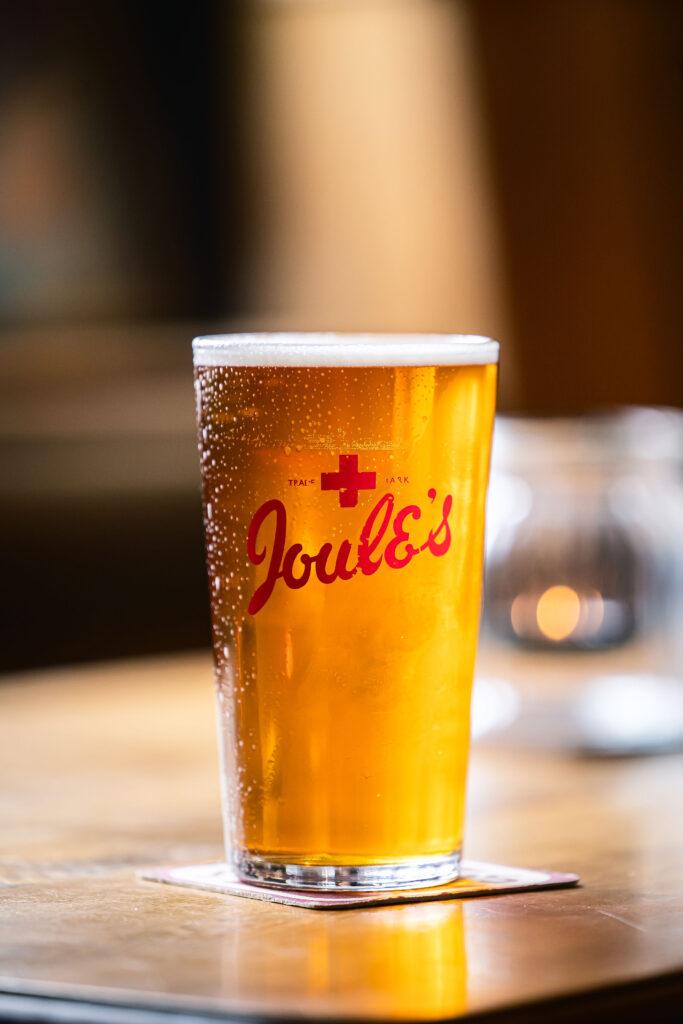
From our brewery to our pubs
All Joule’s beer is delivered directly from the brewery to our own Taphouses on our own drays.
You won’t find our beer travelling around the country through the free trade, and you won’t find it in bottles and cans either. Joule’s is brewed for draught and served in Joule’s Taphouses.
We deliberately keep those Taphouses within roughly an hour and a half of Market Drayton, so the beer we make stays close to home.
That works rather nicely for cask. We know where it is going, we know the landlords looking after it and we don’t need to chase long shelf lives or send our beer hundreds of miles before it reaches the bar.
It leaves our brewery, goes onto our dray and heads for one of our pubs.
Then the landlord takes over.
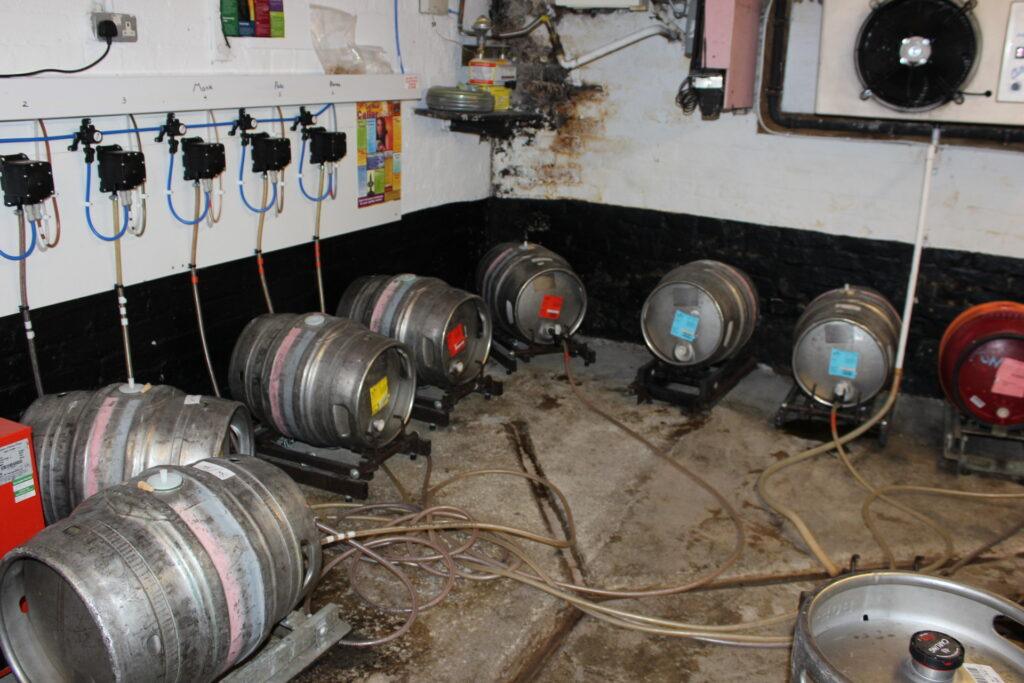
The cellar is part of the process
When that cask arrives, it still isn’t ready to serve.
It needs to be put onto stillage and given time to settle. Those finings get to work, helping the yeast drop out and allowing the beer to become clear. The landlord and their team need to keep it at the right cellar temperature, check its condition and know when it is ready to go on sale.
This is why cellar keeping matters so much with cask.
The brewery has made the beer, but the pub is finishing it.
And because we design and operate our Taphouses with our beer in mind, we think about details most customers will never see. One of those is keeping our cask beer lines as short as possible, reducing the distance the beer has to travel between the cask in the cellar and the handpull upstairs.
It sounds like a tiny thing. There are lots of tiny things behind a great pint.
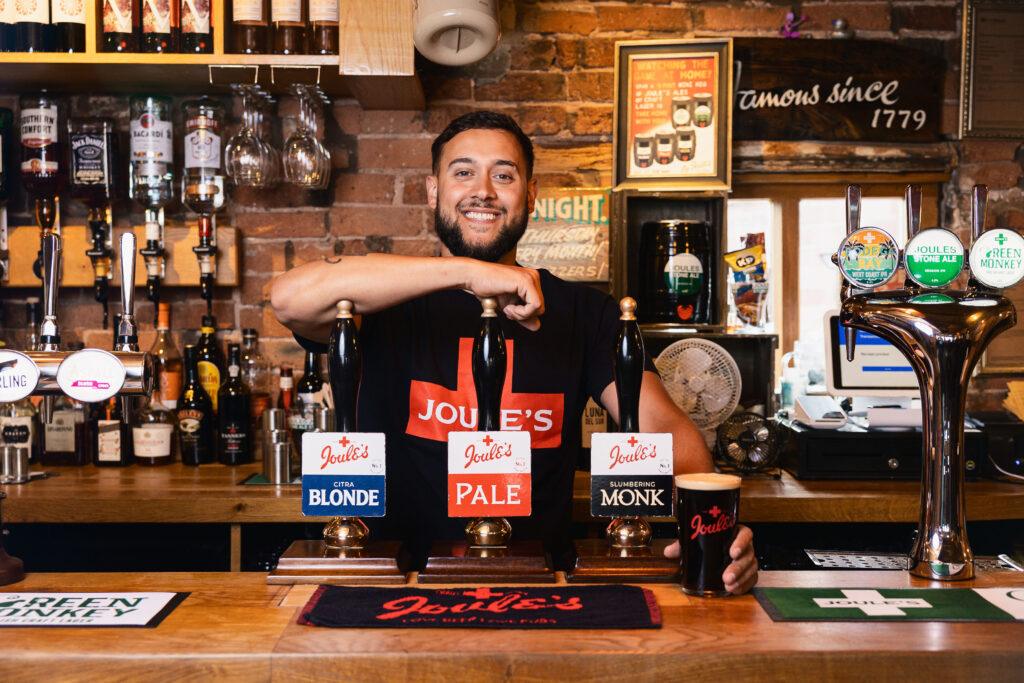
Then somebody pulls the handle
Finally, the pump clip goes on.
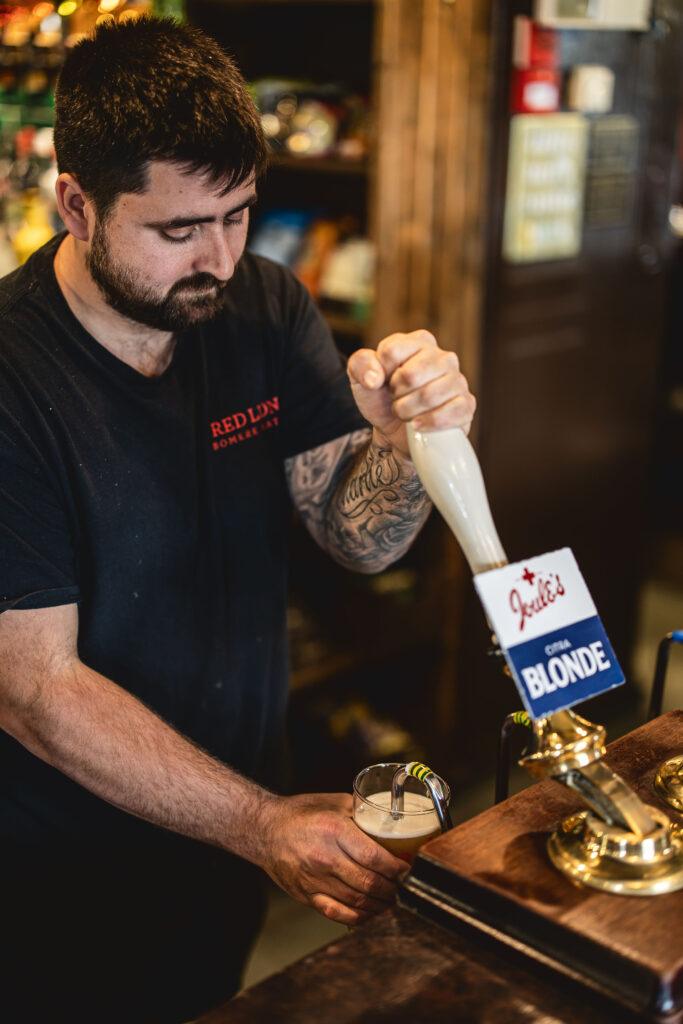
The handpull you see on the bar is connected to a beer engine, which physically draws the beer from the cask in the cellar, through the beer line and into your glass.
There’s no pressurised keg pushing it to the tap. Someone actually has to pull it.
It’s a method of serving beer with centuries of British pub history behind it, and it’s still how we serve our cask today.
By this point, your pint has been through quite a journey. British barley has been malted and milled. Water has come up from the aquifer beneath our brewery. The two have met in the mash tun. The wort has been boiled with hops. Our own yeast has fermented it. The beer has been racked while still alive, conditioned naturally in its cask, travelled out on our dray and been looked after in the cellar by one of our landlords.
Then it travels those final few feet through the handpull.
And lands on the bar.
Grain to glass
For all the science and equipment involved, there is something reassuringly straightforward about cask.
Four ingredients: A brewery. A cask. A good cellar. A handpull.
The way we do it today would look very different to the brewers who came before us. Our brewery is more modern, our understanding of fermentation is considerably better and thankfully nobody has to roll a wooden barrel onto the bar to pour you a pint. However, the basic idea has survived.
At Joule’s, there’s another thread running through it too. From the brewing water beneath us that connects Market Drayton back to Stone, to the Red Cross that has marked Joule’s beer for generations, through to the five cask handpulls you’ll find on our bars today.
We’re proud of that history.
But as we’ve said throughout Cask Matters, we want cask to have a future, not simply a history.
So perhaps the best way to finish the journey from grain to glass is the obvious one.
Have a pint.
Follow the range with Cask Masters
Throughout September and October, Cask Masters gives you a good excuse to explore all five of those handpulls.
Pick up a stampcard from your Joule’s Taphouse and enjoy two pints of Citra Blonde, two Pale Ale, two Slumbering Monk, and two from our changing Batch or Seasonal range.
Collect all eight stamps and your next Joule’s cask pint is on us.
You can also pick up one of our free Cask Masters booklets, keep track of the beers you’ve tried and enter our ongoing Cask Masters competition.
After everything that’s gone into making it, drinking it is the easy bit!
Explore More News From Joule’s
There’s a lot going on behind a pint of cask. By the time you see it, the hard work is mostly done.
What a night! On Wednesday 14th October, we brought together our landlords, tenants and teams from across the Joule’s estate for our

If you’ve ever stood at the bar looking at the handpulls and wondered what actually makes cask ale different from the beer

There are certain drinks that just belong to a place. Ireland has its stout, Belgium has its Trappist beers, Germany has its