If you’ve ever stood at the bar looking at the handpulls and wondered what actually makes cask ale different from the beer coming from the keg fonts next to them, you’re not alone.
Is it the handpull? Is it less fizzy? Is it warmer? And what does “cask-conditioned” actually mean?
The short answer is that cask ale continues to condition naturally in the cask it is served from. That affects how the beer develops, how it needs to be looked after at the pub and, ultimately, how it tastes in your glass.
There’s quite a lot happening between us brewing a beer in Market Drayton and someone pulling your pint at the bar.
What does ‘cask-conditioned’ actually mean?
When we fill a cask of Joule’s beer, the beer’s journey isn’t quite finished. A small amount of fermentation continues inside the cask. This is known as secondary fermentation, or conditioning, and it naturally produces carbon dioxide within the beer. That natural conditioning is part of what gives a good cask ale its character and softer carbonation. It’s also why what happens next, once the cask leaves us in Market Drayton and reaches the pub, matters so much.
Unlike most keg beer, you can’t simply connect a cask up as soon as it arrives and start pouring.
What happens when cask ale arrives at the pub?
First, it needs a bit of patience. The cask is settled in the cellar and given time to condition properly before it is ready to serve. The pub team prepares it for service, checks its condition and continues to look after it while it is on the bar.
There’s real skill involved in good cellar keeping. Most customers will never see this part of the process, but it has a huge bearing on the pint they eventually drink.
It’s something we talk about a lot at Joule’s because with cask, the brewery starts the job and the pub finishes it. Brewing a great beer is only part of getting a great pint onto the bar.
What’s the difference between cask ale and keg beer?
This is probably the biggest question, and the difference is mainly in how the beer is conditioned and served.
Cask ale continues to condition naturally in its cask and is traditionally served from that cask through a handpull. It tends to have a softer, gentler level of carbonation.
Keg beer is stored in a sealed keg and is served using external gas pressure. It can be more highly carbonated and is generally served colder.
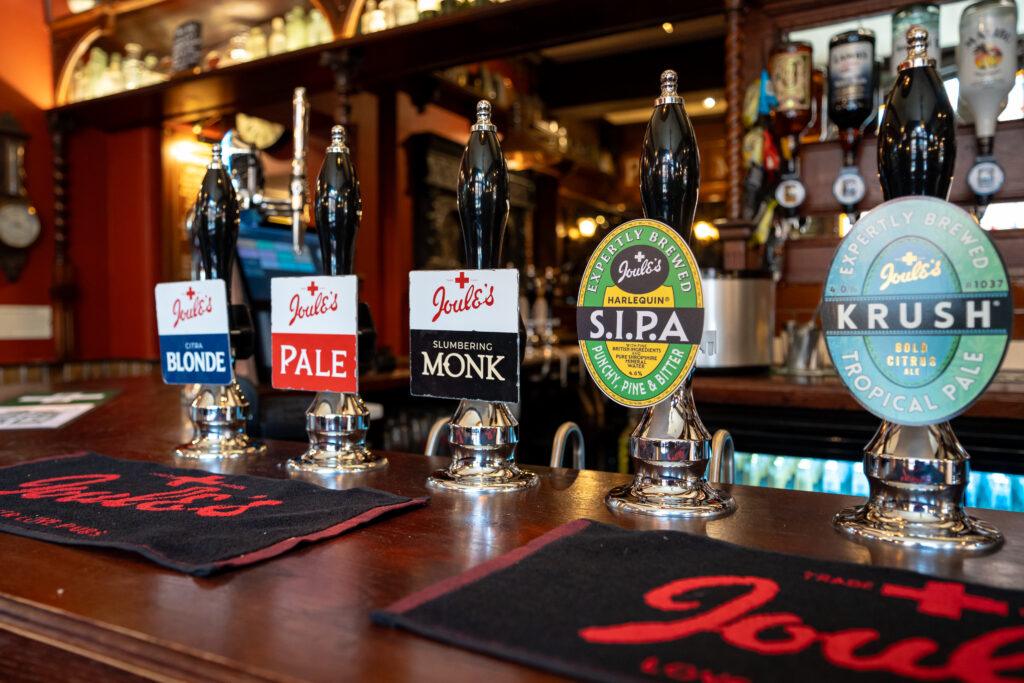
Neither is automatically better than the other, and we brew both at Joule’s. Green Monkey is our lager served from keg, for example, while Citra Blonde, Pale Ale and Slumbering Monk make up our core cask range.
Alongside those three, you’ll find two changing handpulls for our Batch and Seasonal cask beers, meaning there should be five Joule’s cask ales to choose from at any one time.
They’re simply different ways of conditioning and serving beer, and they produce very different drinking experiences.
Is cask ale warm?
No. This is probably one of the most common misconceptions about cask.
A good pint of cask should be served at cellar temperature, generally around 11 to 13°C. That’s warmer than a very cold lager, but it certainly shouldn’t be warm. There’s a reason for that difference too. Serving beer extremely cold can suppress some of its aroma and flavour. At cellar temperature, more of the malt, hops and character of the beer can come through.
So, if your lasting memory of cask is a genuinely warm pint, we’d argue you probably haven’t seen it at its best.
Is cask ale supposed to be flat?
No, although it will be less fizzy than keg beer.
Remember that secondary fermentation happening in the cask? That naturally produces carbon dioxide and gives the beer its condition.
A properly kept cask ale should therefore still have life in the glass, but its carbonation is generally softer than the fizz you might associate with a keg lager. That gives cask its distinctive, gentler mouthfeel.
So, is it less fizzy? Yes. Flat? No.
Why is cask ale pulled by hand?
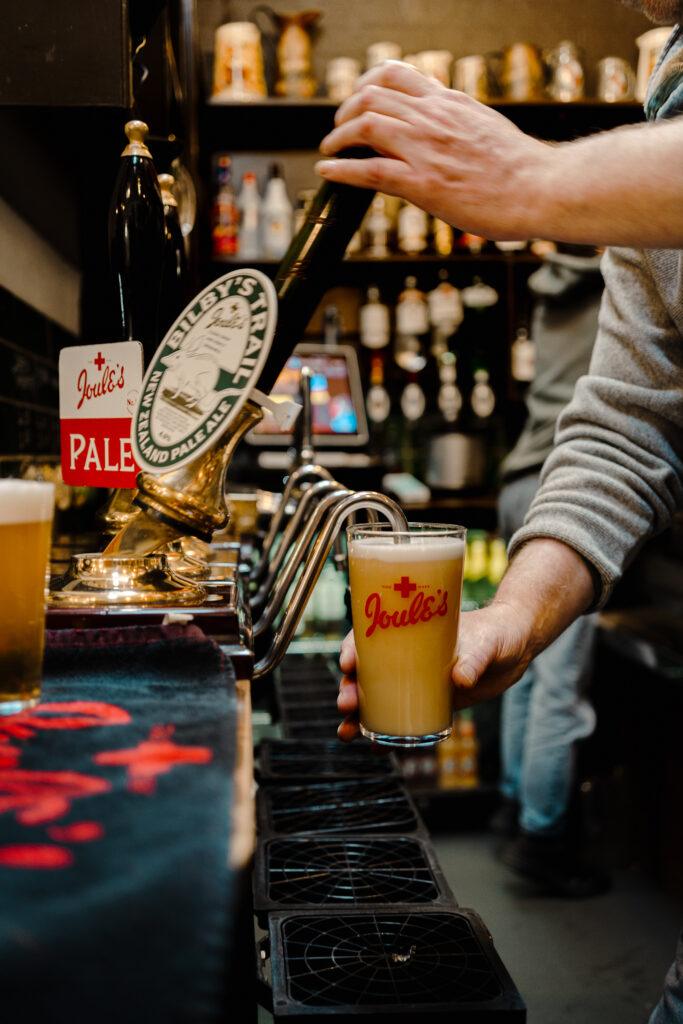
The handles you see lined up along the bar are connected to beer engines, although pretty much everyone calls them handpulls.
When the handle is pulled, the beer engine draws beer from the cask in the cellar up to the bar and into your glass. Unlike most keg dispense, there isn’t external gas pressure pushing the beer from the cellar to the tap.
It’s a very simple bit of kit, but it has become such a familiar part of the British pub that we probably don’t give it much thought.
Next time you order one, watch your pint being pulled. There’s a little more work involved than opening a tap.
What does a sparkler do?
Look closely at the end of some cask ale spouts and you might see a small attachment called a sparkler.
A sparkler has small holes that agitate the beer as it is pulled into the glass, helping to create a tighter head and changing the texture of the finished pint.
Whether or not you should use one is a surprisingly good way to start an argument amongst people who care about cask.
Different parts of the country have different preferences, different beers suit different serves, and there are plenty of opinions on both sides. We’ll save that one for another day.
Why can the same cask ale taste different in different pubs?
Because with cask, the pub is part of the process.
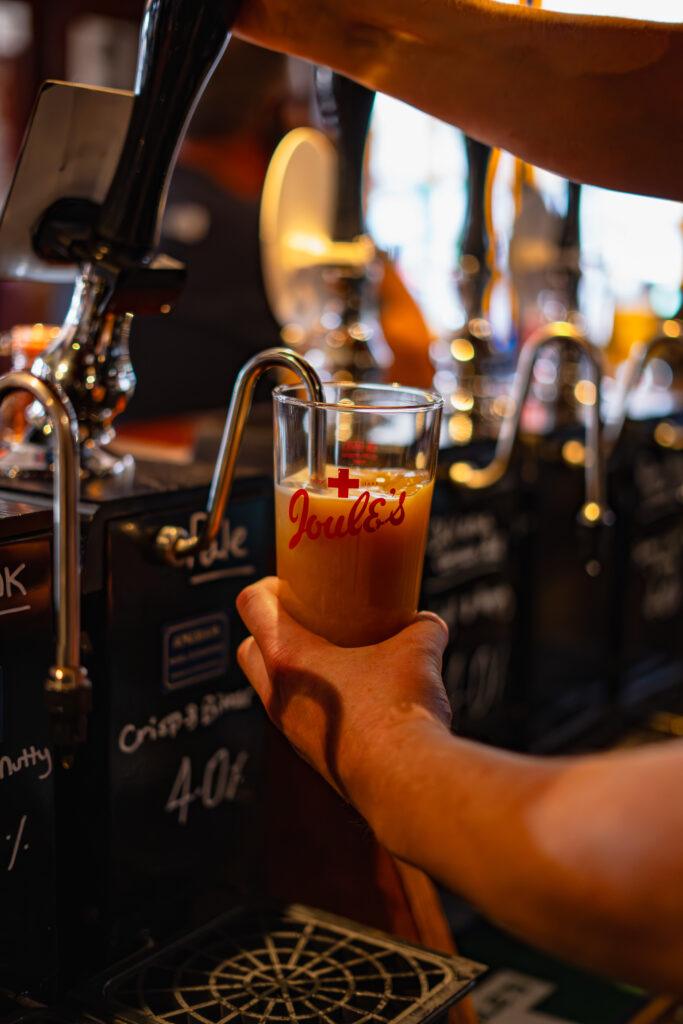
Temperature, condition, freshness, cellar care and dispense can all have an effect on the finished pint. A Joule’s Pale Ale should still taste like a Joule’s Pale Ale wherever you drink it, but cask is naturally conditioned and the care it receives matters.
That’s why good cellar keeping is so important and why we put so much emphasis on looking after cask properly across our pubs. It’s also part of what makes a really good pint of cask so satisfying. There are quite a few people involved in getting it right before it ever reaches you.
Is cask ale always dark and bitter?
Definitely not.
This is where cask describes how a beer is conditioned and served, rather than one particular style of beer.
Our own bar is a good example. Citra Blonde is light and refreshing, Pale Ale is our classic pale cask beer and Slumbering Monk brings something richer and maltier.
Then there are those two changing Batch and Seasonal handpulls, where our brewers can play around with different hops, recipes and styles throughout the year, these can be tropical, fruity, malty, they change depending on the season.
So when someone says they don’t like cask, our first question would probably be: which one have you tried?
Fancy putting it to the test?
For September and October, Cask Masters gives you a good excuse to explore the whole Joule’s cask range.
Pick up a stampcard from the bar and enjoy:
2 Citra Blonde
2 Pale Ale
2 Slumbering Monk
2 Batch or Seasonal pints
Collect all eight stamps and your next Joule’s cask pint is on us.
You can also pick up one of our free Cask Masters booklets, with more about the beers, space to make your own tasting notes and the chance to enter our Cask Masters competition.
You don’t need to know the science behind secondary fermentation or have a strong opinion on sparklers to enjoy a good pint of cask. But next time you see those handpulls lined up along the bar, you might know a little more about what went into getting the beer there.
And if we’ve made you curious about one you haven’t tried before, even better.